
Why SMEs Need Accountants Beyond Compliance?
Small and medium‑sized enterprises (SMEs) are the backbone of most economies. They create jobs, drive innovation, and support local communities. Yet, many SMEs still see accountants as “compliance officers” — professionals who file taxes, prepare payroll, and ensure regulatory deadlines are met.
But in today’s competitive business environment, compliance alone is not enough. SMEs need accountants who think beyond compliance, who act as strategic partners, and who help businesses grow, adapt, and thrive. This article explores why SMEs need accountants beyond compliance and how this shift can transform small businesses.
Compliance vs. Strategic Accounting
Traditionally, accountants were seen as guardians of compliance. Their role was to ensure businesses met legal obligations. While this remains essential, modern SMEs require more.
| Compliance Role | Strategic Role |
|---|---|
| Filing taxes, VAT, payroll | Advising on cash flow, profitability, and growth |
| Producing statutory reports | Providing real-time insights for decision-making |
| Ensuring deadlines | Identifying cost savings and efficiency improvements |
Strategic accountants go beyond numbers. They interpret data, forecast trends, and guide SMEs toward smarter decisions.
Why SMEs Need Accountants Beyond Compliance?
Cash Flow Management
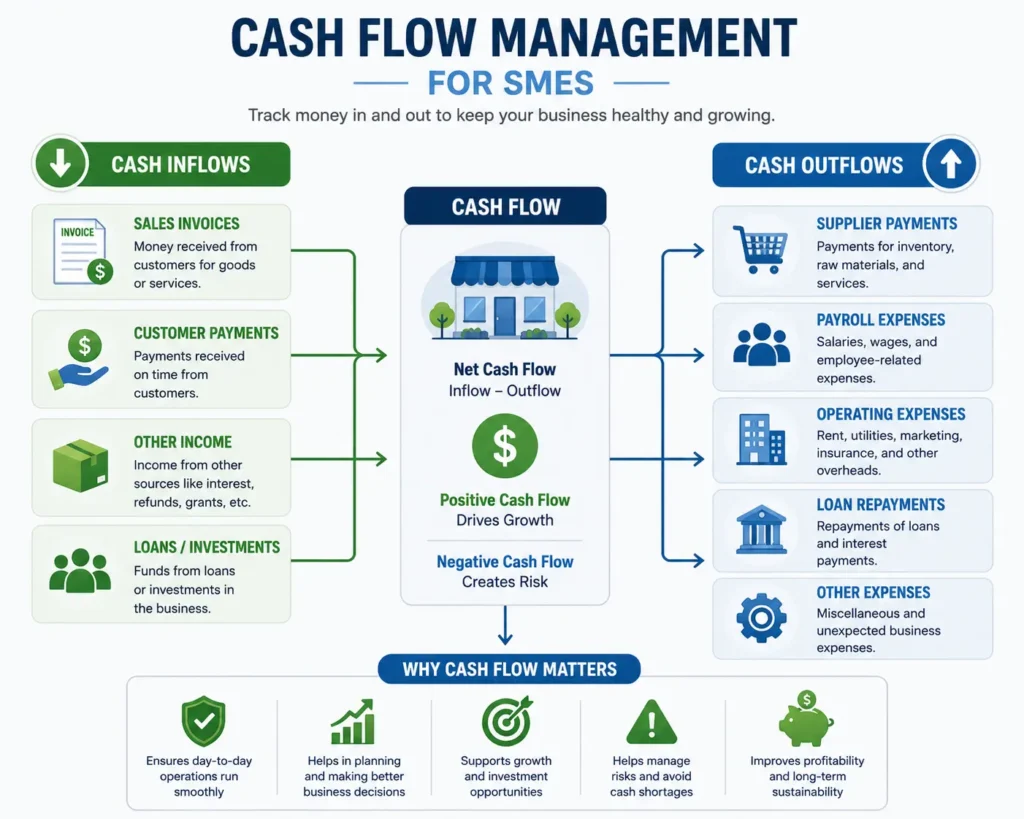
Cash flow is what keeps a business alive. It’s the money coming in and going out every day — paying suppliers, employees, and bills. Many small businesses fail not because they aren’t making profits, but because they run out of cash when they need it most. Without steady cash flow, even a profitable SME can struggle to survive.
Accountants who think beyond compliance help SMEs stay ahead of these problems. They don’t just record numbers; they study how money moves through the business. By forecasting future cash flow, they can warn owners about upcoming shortages and suggest ways to manage them. For example, they might recommend renegotiating supplier terms, tightening credit control, or offering discounts for early payments.
Growth Planning
SMEs often dream of expansion — opening new branches, hiring staff, or investing in technology. Strategic accountants provide scenario planning, helping SMEs understand the financial impact of growth decisions.
They can answer questions like: “If we hire five more employees, how will it affect our cash reserves?” or “What happens if we expand into a new city?”
Technology Integration
Modern accounting is powered by technology. Cloud platforms like Xero and QuickBooks allow SMEs to access real‑time financial data. Accountants who embrace these tools can automate invoicing, track expenses, and provide dashboards that guide decision‑making.
This saves SMEs time, reduces errors, and empowers owners with instant insights.
Risk Management
SMEs face risks ranging from rising costs to delayed client payments. Accountants beyond compliance act as risk managers. They identify financial vulnerabilities early and suggest preventive measures.
For instance, they may recommend diversifying client bases to avoid over‑reliance on one customer or creating emergency funds for unexpected downturns.
Strategic Advisory
Perhaps the most valuable role of accountants beyond compliance is strategic advisory. They help SMEs with pricing strategies, funding options, and market positioning.
Instead of simply reporting past performance, they guide future decisions. This transforms accountants into trusted advisors who shape business strategy.
Real‑World Case Study
Consider a UK‑based cleaning business struggling with late payments and rising costs. Initially, their accountant only handled tax filings. But when the accountant began offering advisory services — introducing cash flow forecasting, negotiating supplier terms, and adopting cloud accounting — the business saw remarkable improvements:
This case highlights why SMEs need accountants beyond compliance: they become growth partners, not just compliance officers.
The Mindset Shift for SMEs
For SMEs, the biggest challenge is mindset. Many owners see accountants as a “cost” rather than an “investment.” This perception must change.
How Accountants Can Evolve
Accountants themselves must embrace new skills to serve SMEs effectively:
By evolving, accountants position themselves as strategic partners SMEs cannot afford to ignore.
Conclusion
Compliance keeps SMEs safe. Strategic accounting helps them thrive.
The future belongs to accountants who combine technical accuracy with business insight. SMEs that recognize this shift will gain a competitive edge, improve resilience, and unlock sustainable growth. The future belongs to SMEs that choose accountants beyond compliance.
🌟Why Choose Cridix Accountancy?
If you’re an SME looking for accountants who think beyond compliance, Cridix Accountancy is your trusted partner. We don’t just file taxes — we help you optimize cash flow, plan growth, integrate technology, and manage risks. Our team specializes in supporting SMEs with tailored advisory services that turn accounting into a growth.